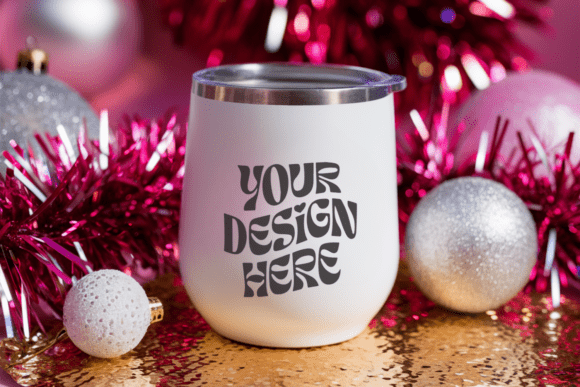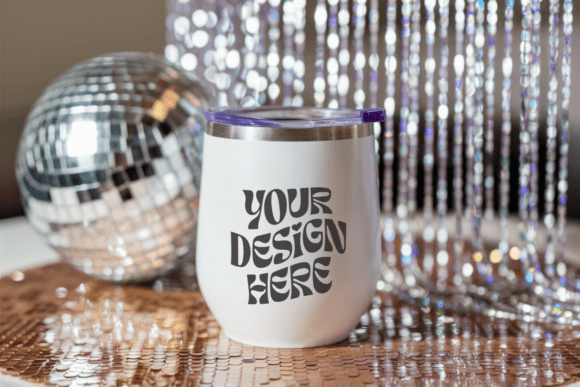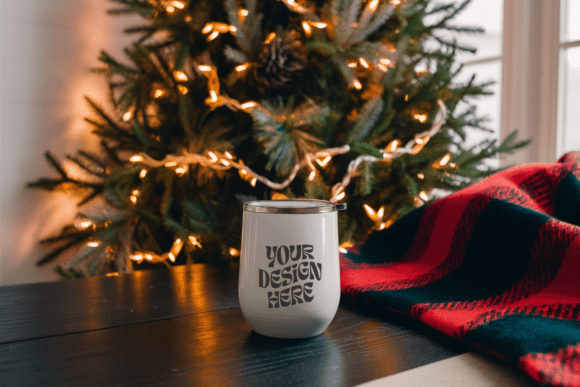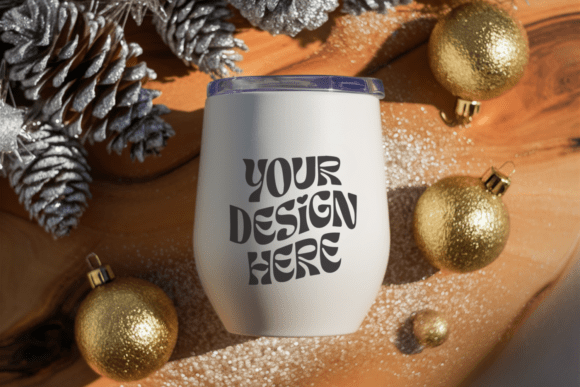
Christmas Wine Tumbler Mockup 15 – A Designer’s Review
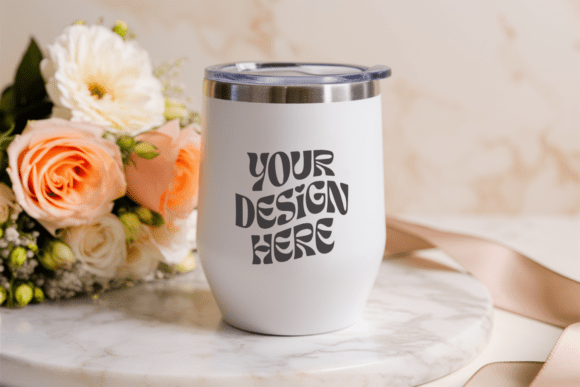
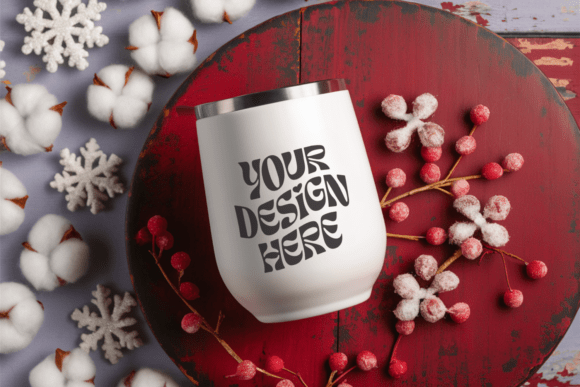
When I first opened Christmas Wine Tumbler Mockup 15, I was curious how a stemless tumbler mockup would translate into an embroidery project. As someone who has stitched hundreds of holiday designs onto everything from sweatshirts to tea towels, I know that a mockup can make or break a client’s trust before they even see the finished piece. This particular asset belongs to the Product Mockups category, and it immediately struck me as a versatile tool for anyone in the Graphics space — but only if you know how to read it like a stitcher, not just a designer.
The mood here is warm, festive, and approachable. The tumbler shape suggests a cozy drink, a fireside moment, and a gift that feels personal. That is exactly the kind of emotional hook a handmade product needs. Whether you are an Etsy seller building a holiday collection or a small shop owner preparing custom apparel, this mockup gives you a clean canvas to showcase your embroidery without distraction. But let’s talk about what happens when you actually take that digital concept and move it into the hoop.
First Impressions: What This Mockup Brings to the Table
What I appreciate about Christmas Wine Tumbler Mockup 15 is its clarity. The blank tumbler PNG format leaves room for your embroidery file to take center stage. For an embroidered patch, a monogram, or a festive wine-themed design, the mockup communicates a finished product that feels intentional. The stemless shape is modern and approachable, which works well for both boutique branding and casual gifts.
The design personality leans toward cozy rather than formal. That makes it a strong fit for holiday embroidery on custom apparel, sweatshirt embroidery, tote bag design, and even baby embroidery if you adapt the theme to something soft. I could see a small shop using this mockup to preview a set of personalized gifts for Christmas — think embroidered wine totes, kitchen towels, or embroidered patches that coordinate with the tumbler concept.
Because it is a mockup rather than an embroidery file itself, you have freedom. You are not locked into a specific stitch count or thread palette. But that freedom also means you need to be disciplined about how you test and present your own design. The mockup is a stage, not the performance.
Real Stitching Scenarios – Where This Design Shines
I recently prepared a batch of custom sweatshirt embroidery for a client who wanted a wine-themed holiday gift set. Using Christmas Wine Tumbler Mockup 15 as a visual reference, I stitched a satin stitch wine glass motif onto a cream-colored sweatshirt. The mockup helped the client visualize the placement and scale before I even threaded the needle. That kind of confidence is invaluable when you are working with commercial embroidery orders.
Here are a few real-use scenarios where this mockup performs well:
- Custom apparel: Sweatshirts, t-shirts, and aprons benefit from the mockup’s clean silhouette. The tumbler shape translates naturally onto a left chest or center back placement.
- Tote bag design: A canvas tote with a festive tumbler embroidery feels like a boutique product. The mockup lets you show the scale against the bag’s surface.
- Holiday embroidery for baby: If you soften the theme with pastel threads and a simpler outline, the same placement works for baby onesies or bibs. The mockup helps parents imagine the finished personalized gift.
- Embroidered patches: A standalone tumbler design works beautifully as a patch. Use the mockup to display the patch on a tumbler surface — a smart way to cross-sell.
- Printable mockups for digital product sellers: If you sell digital embroidery files, this mockup gives buyers a finished preview. That builds trust and reduces returns.
The key strength is versatility. The Festive Drinkware Mockup label is accurate, but the actual embroidery application can extend far beyond drinkware. I have used similar mockups to present designs for pillow covers, tea towels, and even nursery decor.
Where to Use Caution
No mockup is perfect for every situation. With Christmas Wine Tumbler Mockup 15, I advise careful thought before assuming it will fit every product.
- Small hoop sizes: If your embroidery machine maxes out at a 4x4 hoop, you will need to simplify the design. The mockup shows a full tumbler, but a detailed machine embroidery design with dense fill stitch areas may not shrink cleanly. Test your scaled-down version on scrap fabric first.
- Dark fabric: The mockup likely shows a light or neutral background. If you stitch onto dark fabric, thread colors will shift. Thread contrast matters. I always recommend converting your design to black and white in your software to check value contrast before stitching.
- Stretchy fabric: T-shirts and some custom apparel fabrics require proper stabilizer. The mockup does not show fabric texture, so you are responsible for choosing the right backing. For stretchy knits, use a tear-away or cut-away stabilizer depending on stitch density.
- Curved surfaces like caps: The tumbler shape is cylindrical, but an embroidered cap has a curved brim and crown. The mockup does not simulate that geometry. If you plan to stitch the design onto a cap, create a separate test piece on a curved hoop.
- Tiny lettering and dense details: If your embroidery file includes small text or intricate running stitch details, the mockup might make them look larger than they really are. Always verify hoop size and stitch density in your embroidery software before committing to a production run.
Visual Appeal and Customer Perception
A mockup is often the first thing a customer sees. Christmas Wine Tumbler Mockup 15 communicates professionalism. When you present a finished handmade product with a clean mockup, the perceived value jumps. Customers associate quality visuals with quality craftsmanship. For Etsy sellers and small shop products, this is critical.
The Cozy Drink Mockup angle works especially well for gift sets. A customer scrolling through holiday listings will pause on an image that feels warm and giftable. If you pair the mockup with a real finished product shot, you create a narrative: Here is the vision, and here is the reality. That builds trust and reduces hesitation.
For boutique branding, consistency matters. If you use this mockup across multiple listings — wine tumblers, tote bags, aprons — your shop starts to feel curated. That is the kind of brand consistency that turns a casual browser into a repeat buyer.
Practical Notes From the Hoop
Let me share what I actually do when I receive a mockup like this and plan an embroidery project.
- Test on scrap fabric first: Always. The mockup tells you nothing about how the threads will behave on your specific fabric. Stitch a sample on a similar fabric type — cotton, polyester, linen, or blended — and evaluate every detail.
- Check thread color contrast: The mockup’s lighting might differ from your actual thread. Pull physical thread cards and hold them against your fabric. What looks good on screen may wash out in person.
- Review stitch density: If your design has heavy fill stitch areas, check that the density does not cause puckering. Stitch density above 4.0 per mm can be risky on lightweight fabrics.
- Confirm hoop size: The mockup does not specify dimensions. Measure your design in your software and compare it to your hoop’s sewing area. Leave at least 1 cm margin around the edges.
- Inspect small details: Use a magnifying tool in your embroidery software to check satin stitch edges, running stitch connections, and any tiny lettering. If a detail is narrower than 1 mm, reconsider its viability.
- Test on light and dark fabric: Even if you plan to use only one colorway, test both backgrounds. The Blank Tumbler PNG format is neutral, but real fabric adds texture and color that affect perception.
- Use proper stabilizer: For custom apparel like sweatshirts, a medium-weight cut-away stabilizer is my go-to. For baby embroidery on delicate knits, use a lightweight tear-away.
- Check licensing before selling: Christmas Wine Tumbler Mockup 15 is listed under Graphics and Product Mockups, so understand what rights you have. If you plan to sell finished products or include the mockup in your own design assets, verify commercial use terms directly with the seller.
Commercial Use and Licensing Reminders
I always advise fellow creative entrepreneurs and digital product sellers to read the fine print. The product title does not explicitly state license terms, so do not assume. If you are a small business owner using Christmas Wine Tumbler Mockup 15 to present your own machine embroidery design, you are likely fine. But if you plan to resell the mockup itself as part of a bundle, confirm that the license allows redistribution.
For commercial embroidery shops producing hundreds of units, the mockup is a design asset, not the final product. That distinction matters. The mockup helps you sell, but the embroidery file and your stitching skill deliver the value.
I recommend keeping a record of where you source each mockup and what the seller states about usage. That simple habit saves headaches later, especially if you ever want to expand into wholesale or licensing your own designs.
Final Thoughts on the Hoop
Christmas Wine Tumbler Mockup 15 is a solid addition to any designer’s toolkit, provided you treat it as a starting point rather than a promise. It works beautifully for embroidery project previews, Etsy listings, craft business catalogs, and handmade product presentations. The stemless silhouette feels fresh without being trendy, and the festive energy aligns well with holiday offerings.
If you are a hobbyist stitching for family gifts, this mockup will help you present your work with pride. If you are a professional designer managing multiple client projects, it saves time and reduces back-and-forth. And if you are an apparel decorator producing custom apparel at scale, clear visuals like this one can streamline approval processes and reduce errors.
My practical advice: Download the Printable Mockup Tumbler version, open it in your preferred software, and drop in your best holiday embroidery file. Then stitch a sample. That sample will tell you everything you need to know about whether this mockup belongs in your permanent rotation. For my own work, it earned a spot — not because it is flashy, but because it is honest. And in this business, honest visuals are worth more than hype.