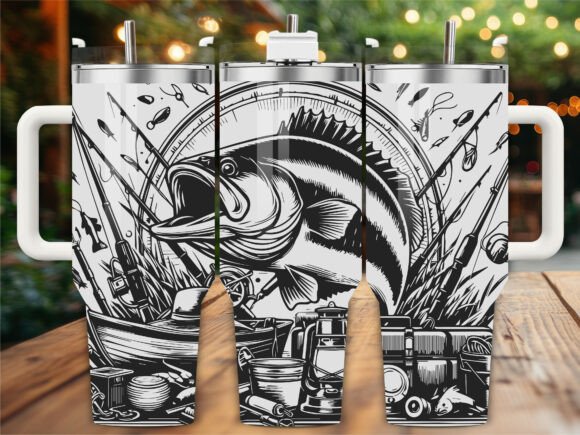
Fishing Boat Graphics for Crafts & Publishing
When a new graphic design asset lands in my creative workflow, I assess it with one question: does this make my content instantly more compelling, or does it add visual noise? The Fishing Boat collection, built around laser-ready tumbler wrap files including full wrap SVG and laser engraving templates for 40oz Stanley-style tumblers, answers that question with surprising clarity. Even though tumbler wraps may seem niche, the visual language here translates directly into blog graphics, editorial design, and small business branding that feels polished and purposeful.
First Impression: Quiet Vintage Appeal with Modern Utility
Opening the Fishing Boat files, I immediately noticed the restrained palette and clean linework. This is not a busy illustration or a hyper-detailed engraving. The design leans into a modern nautical mood — somewhere between a vintage maritime sketch and a clean vector icon. It feels lifestyle-focused but not aggressively masculine, educational but not dry, artistic yet grounded. For a content creator or small business owner building a brand around outdoor living, coastal themes, or rustic aesthetics, this asset creates immediate editorial credibility.
The laser engraving format also means the lines are crisp and intentional. That precision carries over into web use: the SVG scales without degradation, which matters for responsive design on blogs, mobile thumbnails, and retina displays. From a publisher's standpoint, Fishing Boat offers a rare combination of hand-drawn warmth and technical reliability.
Where Fishing Boat Elevates Real Publishing Workflows
I tested this asset across a typical content publishing cycle — from Pinterest pin to lead magnet — and found it performs best in these specific editorial contexts:
- Blog featured images — The clean silhouette works as a standalone hero element or paired with a subtle background texture. It creates immediate visual hierarchy without competing with headline text.
- Pinterest pins and social media graphics — The boat shape reads well at small sizes. I placed it inside a square pin template with a serif headline overlay, and the contrast held beautifully. It also works as a repeating pattern element in Canva templates for quote pins or checklist graphics.
- Newsletter headers and email banners — The understated linework keeps the focus on your message. For a weekly newsletter around outdoor lifestyle, fishing tips, or coastal living, Fishing Boat adds a consistent brand anchor without overwhelming the copy.
- Downloadable resources and lead magnets — I used the SVG as a cover accent for a digital guide titled “Five Knots Every Angler Should Know.” The laser engraving aesthetic gave the PDF a premium, printable feel. Readers associate that kind of detail with paid products, not free downloads, which boosts perceived value.
- Category thumbnails and website headers — For a blog section dedicated to boating or fishing, this graphic creates instant category recognition. It’s specific enough to signal the niche but versatile enough to sit beside other vector-based icons in a consistent visual system.
What This Means for Content Performance
Using Fishing Boat in real publishing workflows directly supports the metrics that matter to bloggers, affiliate marketers, and digital product sellers:
- Stronger first impression – The clean, professional linework signals attention to detail. Readers who land on an article and see intentional design are more likely to stay and explore.
- Clearer visual hierarchy – Because the asset is not overly detailed, it frames headline text and calls to action without distraction. This improves scanability and click-through potential on both desktop and mobile.
- Consistent brand identity – Whether you use it as a blog header, Pinterest pin accent, or printable design cover, the unified aesthetic builds recognition across channels. For small business branding, that consistency builds trust.
- Stronger category recognition – A specific graphic like Fishing Boat signals expertise. When readers see the same visual language across articles, guides, and social media, they begin to associate your brand with that topic.
- Professional-grade editorial quality – Even a simple lead magnet or newsletter feels more polished when the design assets carry intentional style. This is especially important for affiliate marketing content, where reader trust directly affects conversion rates.
Best Places to Use This Asset in Your Content Stack
After testing across multiple formats, here is where Fishing Boat delivers the highest editorial value:
- Hero images and article openers for outdoor, travel, or lifestyle content
- Pinterest pins with educational or how-to headlines
- Blog graphics for listicles, gear reviews, and destination guides
- Editorial accents between sections of long-form articles
- Content upgrade covers and digital guide headers
- Category visuals for blog navigation menus or sidebar widgets
- Newsletter headers that need a simple, memorable mark
- Social media previews for Facebook, Instagram, and LinkedIn articles
- Printable design elements for worksheets, checklists, or journal pages
Where to Use Fishing Boat with Care
No asset is universal. Here are the contexts where I would test Fishing Boat carefully before committing:
- Small mobile thumbnails – While the shape reads well, the finer line details may become muddy at very small sizes. Always preview the graphic at 120px wide or less to confirm clarity.
- Text-heavy blog images with dense copy – The nautical linework pairs best with generous whitespace. If you overlay multiple paragraphs or data points, the visual balance may shift. Keep headlines clean and concise.
- Low-contrast backgrounds – The SVG lines are medium weight. Against pastel or very light backgrounds, they can lose punch. Add a subtle drop shadow or use a darker modified version for those contexts.
- Serious professional niches – If your content targets corporate finance, legal advice, or high-tech B2B audiences, the maritime theme may feel out of place. The asset works best for lifestyle, education, outdoor, and creative niches.
- Minimalist visual systems – Some modern design systems rely entirely on abstract shapes and sans-serif typography. Fishing Boat adds a representational element that may not align with that approach unless you intentionally embrace a blended editorial style.
Practical Publisher Notes Before You Publish
Before committing this graphic design asset to a monetized blog or paid content product, run it through these real-world checks:
- Preview on desktop and mobile screens – The SVG scales perfectly, but test how it renders next to your chosen body copy. Check both Firefox and Chrome, as SVG rendering can vary slightly.
- Test thumbnail performance – Resize the graphic to 150x150 and 300x300 pixels. The boat silhouette should remain recognizable and the linework crisp.
- Check contrast with headline text – Place serif, sans serif, script, handwritten, and display font styles over the graphic. Notice which combinations feel balanced and which create visual competition.
- Try it in black and white – Remove all color and evaluate the asset on tonal contrast alone. This ensures your design works in grayscale email clients or monochrome printables.
- Optimize file size for web performance – Even SVGs can balloon if not cleaned up. Run the file through an SVG optimizer and confirm the final weight stays under 50KB for fast loading on blog pages and Pinterest pins.
- Confirm commercial licensing terms – Before using Fishing Boat on affiliate pages, within digital products, or as part of a paid lead magnet, verify that the creative marketplace license covers commercial use. This protects your small business branding from legal risk.
- Compress properly for web use – If you export raster versions for use as social media graphics or thumbnail images, save at 72 DPI with appropriate compression. High-resolution laser engraving files are great for print but can slow down page loads if used directly online.
- Preview inside a real blog layout – Drop the asset into a draft post with your actual headline, body text, and sidebar elements. Does it feel cohesive? Does it direct the reader’s eye toward the content or away from it? Adjust placement and size accordingly.
Final Thoughts from a Publisher’s Desk
As someone who spends every day balancing editorial quality with content marketing goals, I appreciate a graphic design asset that does not demand constant justification. Fishing Boat earns its place in a creator’s toolkit because it bridges the gap between artistic intention and publishing reality. The tumbler wrap origins — The Quencher H2.0 Tumbler Wrap Laser SVG files designed for 40oz Stanley-style cups — might seem niche, but the underlying design language translates beautifully into blog graphics, lead magnets, and social media visuals for anyone working in lifestyle, outdoor, or coastal content.
Whether you are building a small business brand around fishing guides, preparing a digital guide for an email list, or simply need a consistent visual anchor for your website headers, this asset delivers editorial polish without excessive styling. Test it alongside your existing Canva templates, compare it to your brand colors, and see how it performs in your specific content stack. For many publishers, Fishing Boat will become a go-to element that quietly strengthens every piece it touches.