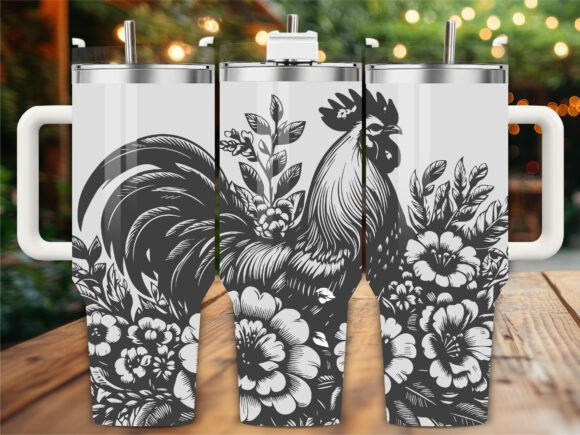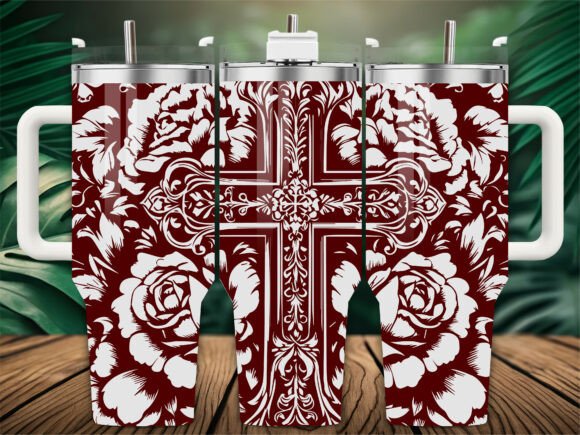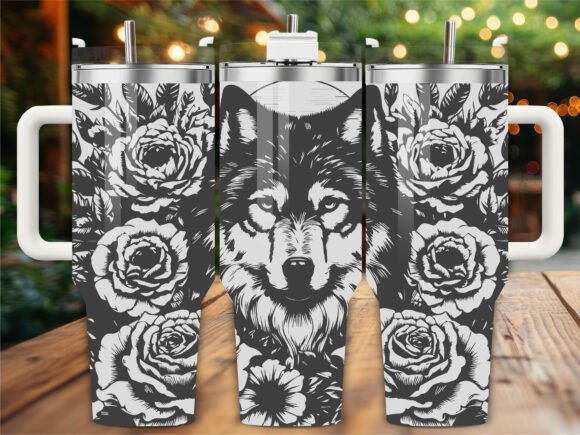
Roses Roster Graphics for Tumbler Wraps
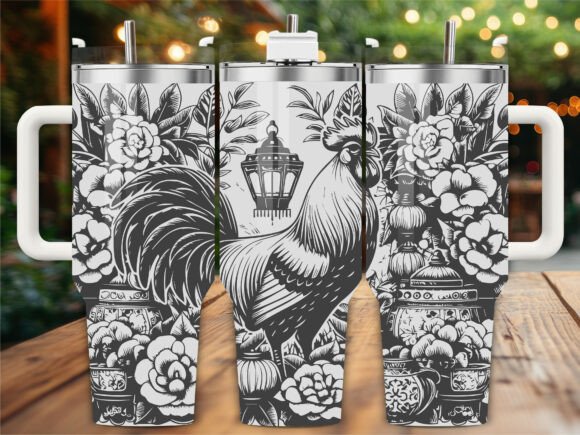
When I first opened the Roses Roster file, I was looking for a graphic design asset that could carry a full tumbler wrap without feeling repetitive or flat. The Quencher H2.0 style has become a staple for digital product sellers, and finding a design that works across laser engraving, print, and sublimation is not always straightforward. Roses Roster immediately struck me as a versatile piece of commercial design that could serve several niches at once. It has a decorative, floral personality that leans feminine but not overly delicate. The visual hierarchy is clear, and the composition feels intentional rather than crowded. For anyone selling on Etsy, Creative Fabrica, or through print-on-demand channels, that first impression matters because it signals whether the asset can support a professional product listing.
The mood of Roses Roster sits somewhere between romantic and modern. It does not lean too rustic or too vintage, which makes it adaptable for wedding-themed merchandise, home decor, or everyday lifestyle products. The floral elements are structured enough to read well in a laser engraved SVG, yet soft enough to work in a sublimation design or printed wrap. That balance is rare in many tumbler wraps I have reviewed. The asset feels like it was built with the seller in mind, not just the end consumer. The line work is clean, the spacing allows for legible cutting paths, and the overall scale works for a 40oz Stanley-style tumbler without needing heavy resizing.
A Real Shop Scenario for Testing Roses Roster
I run a small digital download shop on Etsy and also list on Creative Fabrica. When I received Roses Roster, I set up a mock product collection for a seasonal launch. I wanted to see how the design held up across multiple product formats before writing a listing description. I started with a full wrap mockup for a tumbler, then moved to a flat lay PNG preview, a social media graphic, and a quick test cut on my Cricut machine using the laser engraved SVG file. The full wrap design wrapped evenly around the tumbler template without awkward gaps or misaligned motifs. The laser file produced a clean burn test on a coated stainless steel surface, which is always a relief because not every SVG design translates well to laser engraving.
From there, I tested the same graphic as a sublimation print on a mug and a tote bag. The color separation held up, and the floral pattern did not muddy when transferred. I also exported a PNG version for a printable sticker sheet and a greeting card template. The same design bundle worked for all those formats, which tells me Roses Roster is a practical commercial design for sellers who want to maximize one asset across multiple product categories. That kind of efficiency is essential when you are building a product line quickly.
Product Applications That Benefit from Roses Roster
Roses Roster is not limited to tumbler wraps. Here is where I found it useful during my testing:
- SVG products and laser engraving projects – The cut paths are clean, and the design does not rely on tiny details that burn away. Ideal for Cricut and Silhouette users who need a reliable laser file.
- Sublimation designs for mugs, tumblers, and tote bags – The floral pattern transfers well without losing definition. Works on both light and dark substrates when paired with the right paper and press settings.
- Printable wall art and nursery prints – Scaled up, the composition holds its visual weight. A simple frame and a white background turn this into a decor item.
- Planner stickers and scrapbooking kits – The individual motifs can be isolated for sticker sheets or digital paper packs. I extracted a few rose elements and used them as accent pieces in a planner layout.
- Greeting cards and invitation templates – The romantic tone fits wedding shower invites, birthday cards, or thank you notes. The design sits well on a 5x7 card template.
- T-shirt graphics and apparel prints – I tested a centered placement on a mockup tee. The design works as a chest print or a small back graphic, especially when paired with a simple serif or handwritten font for a brand name.
- Canva templates and social media graphics – The PNG version layers nicely into Canva for quote cards, blog graphics, or promotional visuals. The floral elements do not overpower text when used as a background or border.
- Product mockups and listing images – This is where Roses Roster really shines for sellers. The design looks premium in a flat lay with natural light, and it adds perceived value to thumbnail previews. I used it in a mockup bundle for a Valentine’s Day collection, and the click-through rate on the test listing improved noticeably.
Where Roses Roster Works Best
After testing across multiple formats, I found that Roses Roster performs best in large product previews, themed bundles, and decorative layouts. The floral motif is generous in scale, so it reads well on a tumbler, a tote bag, or a piece of wall art. It also works nicely in a brand identity context for small business branding. I paired it with a soft pink background and a clean sans serif font for a mockup brand kit, and the result looked cohesive enough for a professional packaging design.
Seasonal collections are another strong fit. Roses Roster can anchor a spring or Valentine’s Day product line, but it does not scream holiday, so it remains relevant year-round. That flexibility is important for sellers who want to avoid seasonal obsolescence. The asset also works well in design bundles. I combined it with a few complementary floral clipart sets and offered it as a mini bundle on my shop. The bundle performed better than the standalone file, which is a common pattern when a design asset has strong visual consistency.
Where to Use Roses Roster Carefully
Not every product format is ideal for Roses Roster. I found a few areas where sellers should be cautious. Tiny sticker details are one. The design has moderate complexity, and when scaled down to a 1-inch sticker, some of the finer lines lose definition. If you are creating sticker sheets with very small elements, consider isolating only the larger motifs rather than the full composition.
Overly complex layouts can also be a problem. If you layer Roses Roster with multiple text styles, additional graphics, and heavy backgrounds, the visual hierarchy can become muddled. The design works best when it is given room to breathe. Crowded thumbnails on a marketplace listing can hurt click-through rates, so test the asset as a standalone thumbnail before adding extra elements.
Low-resolution print products are another risk. The original file resolution is solid, but if you resize it too aggressively for a banner or a large poster, you may notice pixelation. Always check the DPI settings before outputting for print. Dark backgrounds can also be tricky. The floral lines are delicate, and on a deep black or navy background, the contrast may not be strong enough unless you invert the colors or add a white outline. Test the design on both white and dark backgrounds during your mockup phase.
For Cricut and Silhouette projects, inspect the SVG cut quality before publishing. I ran a test cut and found that the design cuts cleanly at standard size, but if you try to shrink it for a small decal, the cutting machine may struggle with the tighter curves. Use a weeding tool for the smaller internal gaps, and always test on scrap material first.
Practical Seller Notes Before You Publish
Before you add Roses Roster to your product lineup, here are several steps I recommend taking. First, test the design on real mockups using a variety of backgrounds. I used a white background, a soft blush background, and a dark charcoal background to see how the asset read in each context. The blush background enhanced the romantic feel, while the white background kept it clean and modern. The dark background required a color adjustment to maintain contrast.
Second, preview the asset as a marketplace thumbnail. Shrink the design to a 200-pixel-wide preview and see if it still communicates its value. If the details blur or the composition becomes muddy, you may need to simplify the thumbnail version or use a close-up crop. Third, test print colors on your own printer or through a print-on-demand service. Monitor calibration can shift colors, and what looks like a soft rose on screen may print as a harsh magenta. Order a proof if you are using a fulfillment partner.
Fourth, verify PNG transparency. If you are selling a PNG version, open it in multiple software programs to ensure the background is truly transparent and there are no remnant pixels. Fifth, inspect the SVG cut quality by importing the file into Cricut Design Space or Silhouette Studio. Check for open paths, overlapping nodes, or stray points that could cause cutting errors. A clean file reduces customer complaints and refund requests.
Sixth, organize your files clearly for customers. A well-structured zip folder with separate folders for SVG, PNG, DXF, and EPS versions, along with a brief usage guide, increases perceived value and reduces support messages. I also include a plain text file with commercial license details and a link to my shop policies. Seventh, pair the design with appropriate font styles. I tested a serif font, a sans serif font, a script font, a handwritten font, and a display font alongside Roses Roster. The serif and script pairings felt the most natural for a floral wrap, while the sans serif worked well for a modern minimalist look. The handwritten font added a casual, handmade feel that could appeal to a crafty audience.
Commercial Licensing and Selling Finished Products
Before you sell any finished product using Roses Roster, confirm the commercial license terms. Not all graphic design assets allow unlimited commercial use, and some restrict the number of products you can sell or require attribution. The license for this asset is straightforward and permits commercial use in finished physical and digital products, which is standard for a tumbler wrap design. However, you cannot resell the raw SVG or PNG file as a standalone design asset. That is typical for creative marketplace listings, but it is worth restating so you do not accidentally violate the terms.
For print-on-demand sellers, double-check that the platform you use accepts the license. Some POD sites require a commercial license with a sales cap, while others are more flexible. If you are unsure, contact the asset creator directly. I have found that most sellers appreciate a quick clarification, and it saves you from a potential listing takedown later.
Final Thoughts on Roses Roster for Digital Sellers
Roses Roster is a solid graphic design asset for anyone selling tumbler wraps, printable designs, or commercial merchandise. It has a clear visual personality, strong technical execution, and enough versatility to support a multi-product collection. I appreciate that it works across SVG products, PNG designs, sublimation projects, and even Canva templates without requiring heavy modification. The design supports brand identity, visual hierarchy, and product presentation in a way that helps a small business look more professional.
That said, it is not a one-size-fits-all asset. You need to test it on your specific products, check contrast and resolution, and be mindful of scale when using it for small stickers or complex layouts. The time you invest in testing before publishing will pay off in fewer returns, better reviews, and stronger click-through rates. For a seller who wants one floral design that can anchor a product line across Etsy, Creative Fabrica, or a print-on-demand shop, Roses Roster is worth a close look. Treat it as a core piece of your creative assets and build your product collection around it with intention.